Most of the stress around land clearing comes from not knowing what happens after the crew arrives. Here’s the short version: a forestry mulching job on a standard Tampa Bay residential lot typically runs three phases — site walk, clearing pass, and final walkthrough — and wraps in a single day. This guide walks through each phase so you know exactly what to expect, when to be on-site, and what the property looks like when it’s done.
Understanding the process upfront also helps you ask better questions when getting quotes. A contractor who can’t clearly describe each phase before the job starts is one worth reconsidering before you sign anything.
Phase 1: The Site Walk and Assessment
Nothing happens before a qualified crew member walks the property with you. This isn’t a formality — it’s where the job actually gets defined. During the site walk, the crew identifies the trees and vegetation you want to keep, marks the clearing boundaries, checks for any drainage features or underground obstacles, and flags areas that may need special attention.
This conversation is also when permit questions get resolved. According to Hillsborough County’s tree resources guidance, if you plan to clear land to construct a home, all tree removal, lot grading, and land alterations require a Land Alteration and Landscaping permit — and you cannot clear the property before securing it. For forestry mulching jobs that aren’t tied to a building permit, a permit is often not required, but the site walk is the right time to confirm this based on your specific lot and goals.
Pro Tip: Mark the trees you want to keep before the crew arrives if you can. Use spray paint, flagging tape, or even a note in your estimate. The more clearly preservation areas are defined before the machine starts, the cleaner the result.
What Happens If Your Lot Has Protected Trees?
Florida’s protected tree rules vary by county and municipality. In unincorporated Hillsborough County, tree removal permits can take up to 3.5 weeks to process once an application is submitted, and a field inspection is required within 15 business days of receipt. If your clearing timeline is tight, factoring in potential permit lead time before scheduling the crew is one of the most common things property owners skip — and one of the most common reasons jobs get delayed.
Phase 2: Equipment Setup and Mobilization
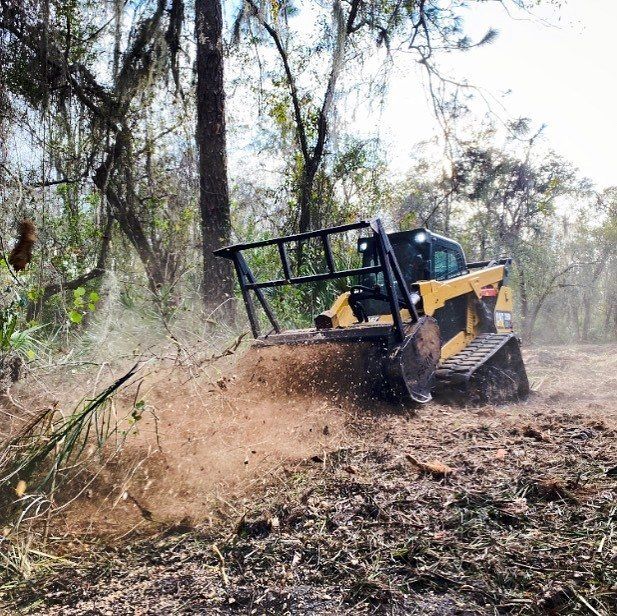
Once the site walk is complete and any permit questions are settled, the crew mobilizes equipment. For a forestry mulching job, this typically means a single tracked or wheeled mulching machine — sometimes a skid steer with a mulching head for tighter residential lots, and a larger dedicated forestry mulcher for properties with heavier vegetation or bigger acreage.
You don’t need to be on-site during the clearing pass, but it’s worth understanding what the machine is doing. The mulching drum works through the property in overlapping passes, grinding everything in its path — brush, stumps, vines, and small trees — into a layer of mulch spread evenly across the ground as it goes. Unlike a bulldozer, which pushes material into piles and disrupts the soil underneath, a mulching machine stays at ground level and leaves the soil structure largely intact.
Did You Know? A single forestry mulching machine can clear approximately one acre of typical Tampa Bay brush per day. Heavier vegetation, steep terrain, or areas with dense mature trees will slow that pace — something a good contractor will account for in your estimate rather than promise a flat rate regardless of conditions.
Phase 3: The Clearing Pass
This is the main event. For most residential lots, the clearing pass is also the fastest phase. The machine works through the property systematically, the operator navigating around any marked preservation trees or areas flagged during the site walk.
One thing that catches first-time customers off guard: the noise level is significant, and the dust or debris cloud the machine kicks up can be substantial depending on how dry the vegetation is. This is normal. The crew handles it, and the site settles quickly once the machine stops.
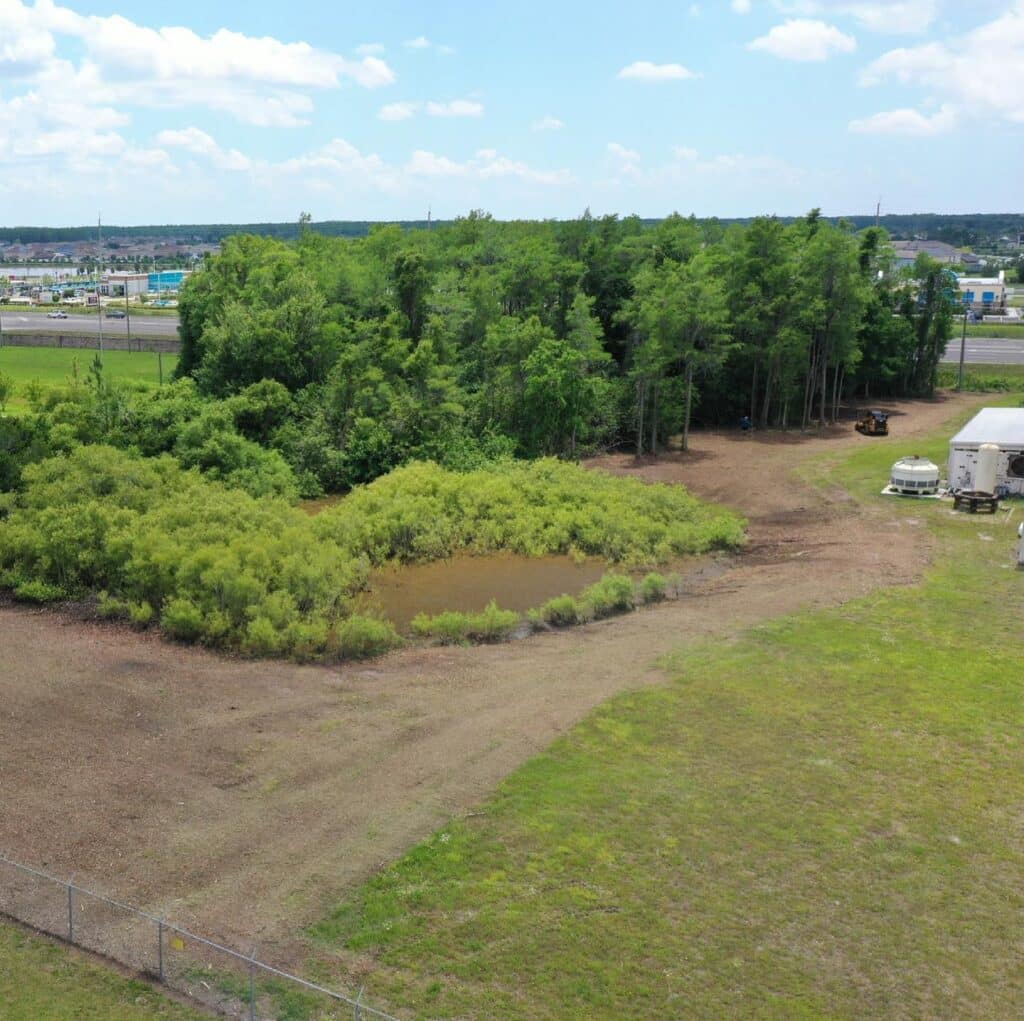
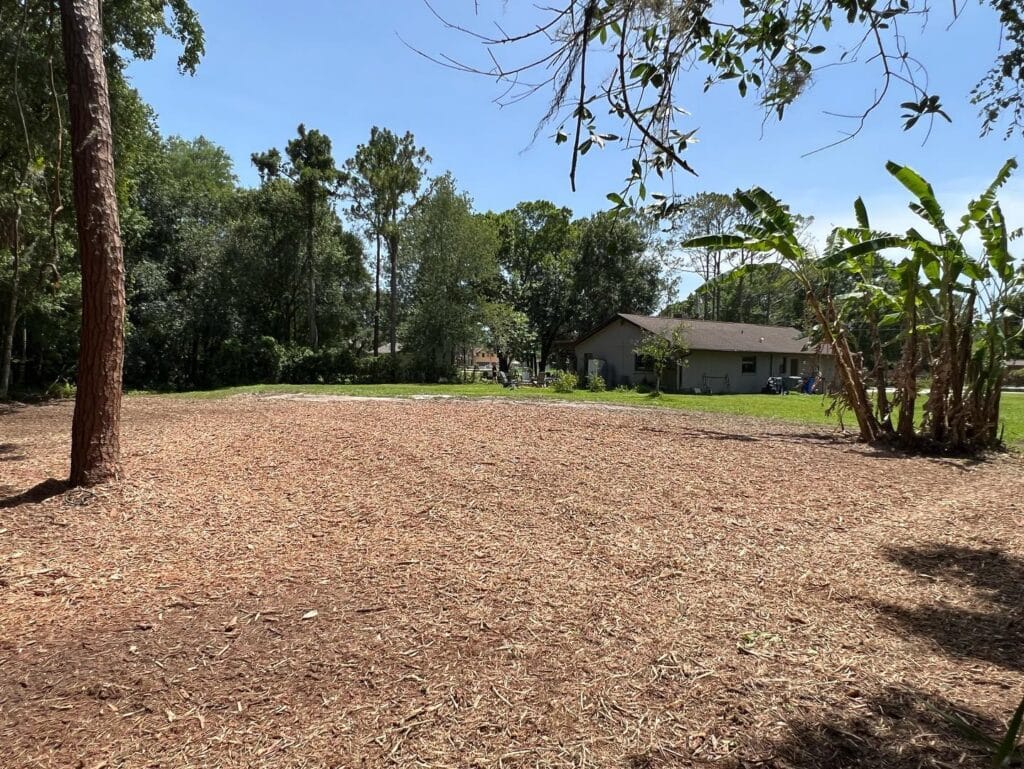
When the pass is complete, the result looks dramatically different from what traditional clearing leaves behind. There are no brush piles, no burn areas, no exposed raw soil. Instead, the ground is covered in a uniform layer of processed mulch — walkable and drivable immediately. We’ve had customers step onto their just-cleared property and comment that it already looks managed. That’s the mulch layer doing its job. For a full breakdown of how this compares to other approaches, the land clearing methods guide covers the tradeoffs between forestry mulching and traditional clearing in detail.
Did You Know? The mulch layer left after forestry mulching isn’t just cosmetic. It acts as erosion protection during Florida’s summer rainy season, slowing surface runoff and holding moisture in the soil — two things bare, bulldozed ground cannot do.
Phase 4: Final Walkthrough and What the Property Looks Like After
Once the clearing pass is done, the crew does a final pass to clean up any areas the operator wants to tighten up, then walks the property with you. This is your opportunity to flag anything that needs additional attention before the crew demobilizes.
After the walkthrough, the property is immediately usable. The mulch layer can be walked on or driven on the same day. If you’re planting grass, you can seed directly through the mulch. If you’re building, the footprint area can be staked out right away. If you simply wanted the overgrowth gone, the property is ready.
The mulch itself breaks down over time, typically several months to a year depending on thickness and Florida’s heat and moisture levels, returning nutrients to the soil as it decomposes. This is why property owners using their land for agricultural clearing often prefer mulching over traditional methods — the soil you build on is healthier for it.
Pro Tip: Take photos on the day of your site walk and again immediately after clearing is complete. Before-and-after documentation is useful for HOA records, building permit applications, and resale if you ever sell the property.
How Long Does the Full Process Take?
For a standard residential lot with moderate vegetation, the realistic timeline from site walk to finished property is one day. Here’s how that typically breaks down:
| Phase | Typical Duration |
| Site walk and assessment | 30–60 minutes |
| Equipment mobilization | 30–60 minutes |
| Clearing pass (per acre) | 4–8 hours |
| Final walkthrough | 15–30 minutes |
Larger properties, heavier vegetation, or jobs requiring permit processing will stretch this timeline. A 3–5 acre wooded tract might take two to three days. Any job requiring a Hillsborough County LAL permit should plan for the permit processing window before scheduling.
Frequently Asked Questions
How long does land clearing take on a residential lot?
Most residential forestry mulching jobs in Tampa Bay finish in a single day. The full process — site walk, clearing pass, and final walkthrough — typically runs six to ten hours depending on lot size and vegetation density.
Do I need to be home during land clearing?
You should be present for the site walk at the start and the final walkthrough at the end. You don’t need to stay on-site during the clearing pass itself, though many property owners choose to.
What does a property look like after forestry mulching?
The cleared area will be covered in a uniform layer of wood chip mulch. There are no brush piles, no bare exposed soil, and no burn areas. The ground is walkable and drivable the same day the job is complete.
Does forestry mulching require a permit in Hillsborough County?
For most standard residential mulching jobs not tied to a building permit, no permit is required. If your clearing is part of a new home construction, an LAL permit is required and must be obtained before any clearing begins.
What should I do to prepare before the crew arrives?
Mark any trees you want preserved with flagging tape or spray paint. Clear personal property — sheds, fencing, vehicles — from the work area. Confirm your property lines if there’s any question about boundaries near neighbors.
Make the Right Call Before the Equipment Arrives
Knowing what the land clearing process looks like from start to finish makes every other decision easier — when to schedule, what to ask your contractor, and what to do with the property once the crew leaves. If you’re still deciding which method makes sense for your property before booking a site walk, our land clearing methods guide breaks down forestry mulching vs. traditional clearing so you can compare before calling anyone.
Contact Clear Cut Heavy Brush Mulching to schedule your free site assessment. We’ll walk the property, answer your permit questions, and give you a realistic timeline before any equipment gets loaded.