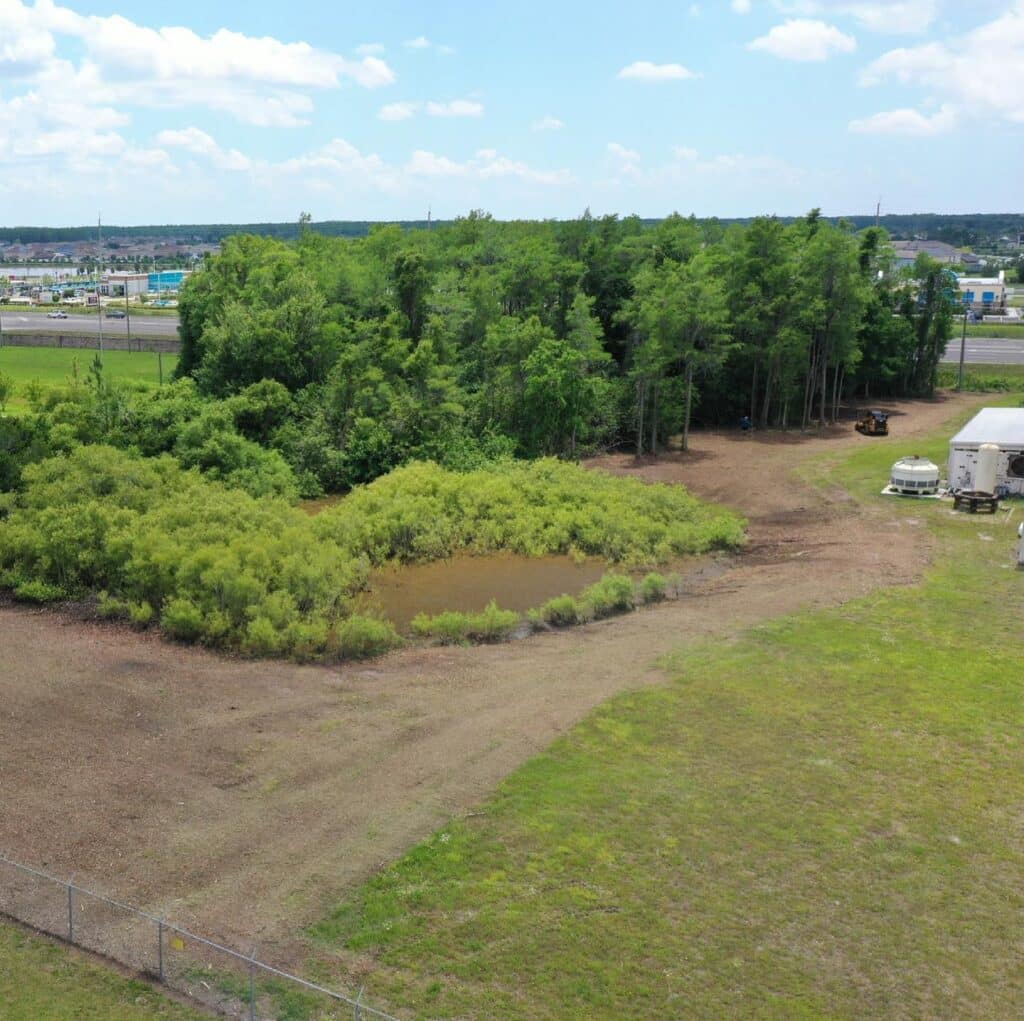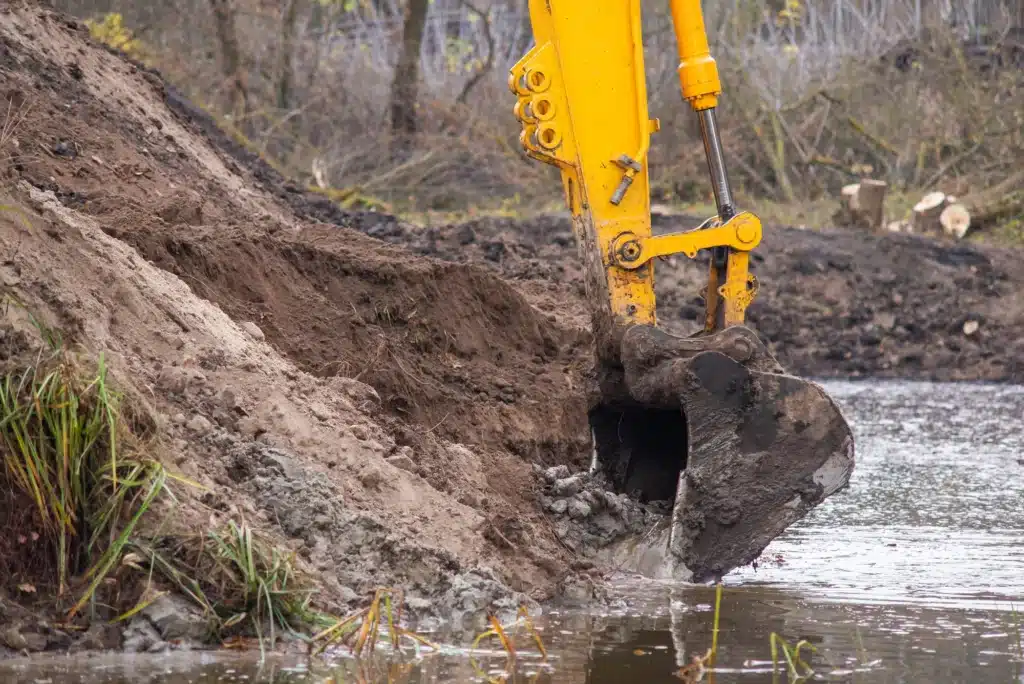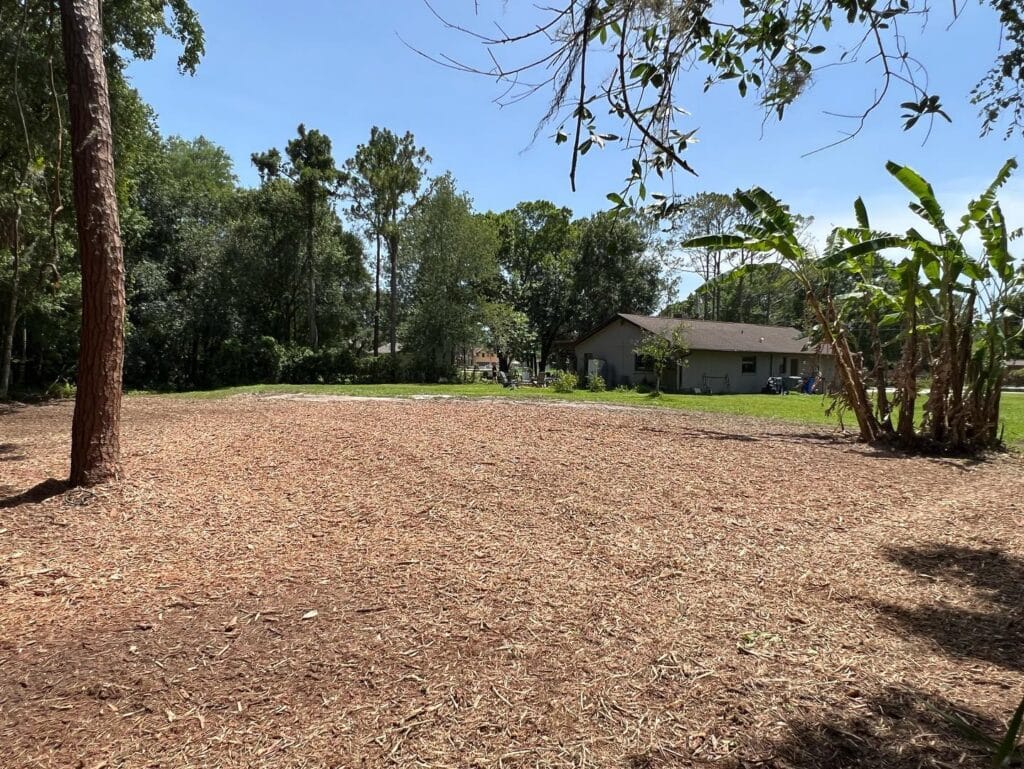
The equipment used for forestry mulching is usually a carrier machine paired with a rotary mulching head. The carrier may be a skid steer, excavator, tractor, or purpose-built forestry mulcher. The right setup depends on vegetation density, tree size, slope, access, soil conditions, and what you want the property to become after clearing.
The three parts of a forestry mulching setup
A forestry mulching system has three working parts:
- Carrier machine: The skid steer, excavator, tractor, or dedicated mulcher that supplies movement and hydraulic power.
- Mulching head: The front- or boom-mounted attachment that cuts, grinds, and shreds brush, vines, saplings, and other woody growth.
- Operator and setup: The person who controls the head, chooses the travel path, protects retained trees and improvements, and adjusts the work to the ground conditions.
The U.S. Forest Service equipment catalog for mulchers describes mulchers mounted on skid steers, excavators, tractors, loaders, and dozers. That range is why a site visit matters before anyone promises a production rate or a finished appearance.
Skid steers with forestry mulching attachments
A tracked skid steer with a forestry mulching attachment is a common setup for residential lots, fence lines, trails, overgrown back sections, and smaller acreage. It can maneuver in tighter areas than a large dedicated machine and can carry other attachments when a project needs more than one type of work.
A skid steer works well when:
- Access is wide enough for the carrier and transport equipment.
- The vegetation is within the practical size range of the carrier and head.
- The property needs controlled clearing around trees, structures, or improvements.
- The ground is firm enough to support the machine without creating avoidable ruts.
The carrier and attachment must be matched. Hydraulic flow, machine weight, width, visibility, and ground pressure all affect how well the setup can work. A small carrier with an oversized head may run slowly or struggle in heavy material. A larger setup may be unnecessary for a narrow access lane or a residential back lot.
Dedicated tracked forestry mulchers
A purpose-built forestry mulcher combines the carrier and mulching system into one machine. These units are designed for demanding brush and woody vegetation work and may offer more power, stability, reach, or production capacity than a compact attachment setup.
A dedicated mulcher can make sense for larger acreage, dense stands, heavy regrowth, or jobs where the machine needs to keep moving through substantial material. The tradeoff is access. A larger machine needs more room to enter, turn, load, and travel across the property.
Excavators and boom-mounted mulching heads
An excavator can carry a mulching head on the end of a boom. This configuration gives the operator reach around obstacles, along slopes, and into areas where the carrier cannot drive directly over every part of the ground.
Boom-mounted equipment may be useful for:
- Reaching across ditches or uneven ground.
- Working around retained trees and property improvements.
- Treating slopes where direct travel is limited.
- Opening narrow corridors or difficult edges.
- Keeping the carrier positioned on firmer ground while the head reaches outward.
The U.S. Forest Service explains that excavator-mounted mulchers can reduce the need for the carrier to travel over every part of the treatment area. That can be helpful on challenging terrain, but the head is often narrower than a drive-to-tree mulcher, so the work may require more passes.
Vertical and horizontal mulching heads
Mulching heads are not all built the same. Two broad designs are vertical-shaft and horizontal-shaft heads, and the choice affects how the machine handles vegetation.
A vertical-shaft head resembles a heavy-duty rotary cutter. It can be useful for brush, shrubs, and smaller saplings, especially where the operator needs to work around individual trees or reach with a boom-mounted attachment.
A horizontal-shaft head uses a rotating drum with teeth, knives, or hammers. It is commonly associated with forestry mulching because it can process woody material into smaller pieces and leave the material distributed across the site.
Head design is only one part of the decision. Tooth style, drum width, hydraulic requirements, carrier power, material size, and ground conditions all affect the result.
What the machine has to work around in Tampa Bay
Tampa Bay properties can combine open grass, palmettos, vines, pepper trees, saplings, fallen material, fence lines, and wet or uneven areas. A machine selected for a clean, level field may not be the right machine for a wooded lot or a property with limited access.
Before equipment arrives, identify:
- Gates, driveways, bridges, and narrow access points.
- Fences, irrigation lines, septic components, wells, and buried utilities.
- Trees to preserve and areas that should not be disturbed.
- Drainage swales, ponds, wetlands, and soft ground.
- The final goal: a trail, pasture, usable lot, building area, firebreak, or maintenance zone.
If the project involves site clearing near construction, the OSHA site-clearing standard is a useful reminder that equipment selection and operator protection are part of the job, not details to leave until the machine is on site.
Forestry mulching equipment is not the same as a complete site-development crew
Forestry mulching cuts and processes vegetation in place. It does not automatically remove every stump, excavate soil, install drainage, grade a building pad, or prepare utility trenches.
If the end goal is a home site, barn, driveway, pond, or commercial improvement, ask what work comes after mulching. The project may need excavation, grading, stump work, hauling, erosion controls, or permitting from a separate provider. The land clearing process guide explains the planning steps that should be discussed before work starts.
For agricultural and larger properties, review the agricultural land clearing service and the broader Tampa Bay land clearing methods guide to compare how the desired finished condition affects the equipment plan.
Questions to ask before booking forestry mulching
A good estimate should connect the machine to the property. Ask:
- What carrier and mulching head do you plan to use, and why?
- What vegetation and tree sizes can that setup handle on this site?
- How will you protect fences, retained trees, septic components, drainage, and structures?
- What access width, turning room, and ground conditions do you need?
- Will the finished result be mulched vegetation, a graded surface, a trail, or something else?
- What work is excluded, such as stump removal, hauling, grading, or drainage?
The right forestry mulching equipment depends on the property
A skid steer may be the right choice for a tight residential lot. A dedicated tracked mulcher may make more sense for dense growth across larger acreage. An excavator-mounted head may help where reach, slope, or limited ground travel changes the job. The best setup is the one that can safely reach the material, process it to the requested finish, and work around the parts of the property that need to stay.
Clear Cut Heavy Brush Mulching can review the vegetation, access, terrain, and project goal before recommending a clearing approach. Contact Clear Cut for a property review before choosing equipment based on photographs or machine size alone.
Frequently Asked Questions
What is the most common machine used for forestry mulching?
Tracked skid steers with forestry mulching attachments are common for residential lots, trails, fence lines, and smaller acreage. Larger or more difficult sites may call for a dedicated forestry mulcher or an excavator with a boom-mounted head.
What is the difference between a forestry mulcher and a brush cutter?
A brush cutter generally cuts vegetation, while a forestry mulcher uses a specialized head to grind or shred woody material into smaller pieces. The right choice depends on vegetation size, the desired finish, terrain, and how the remaining material will be handled.
Can forestry mulching equipment remove stumps?
Forestry mulching can process some above-ground woody growth, but it does not automatically mean every stump will be excavated or ground below grade. Confirm stump depth, removal, and final grading in the written scope before work begins.
Can a forestry mulcher work on a slope?
Some forestry mulching setups can work on slopes, but safe access depends on the carrier, head, slope angle, soil, moisture, obstacles, and operator judgment. An on-site review is needed before a contractor can confirm whether a particular area is suitable.
What should I do before the equipment arrives?
Mark property lines, gates, utilities, septic components, wells, retained trees, drainage features, and any areas that should remain untouched. Clear access where possible and tell the contractor what the property needs to look like after the clearing pass.