Forestry mulching is a one-pass land clearing method where a machine grinds standing brush, vines, saplings, and small trees into mulch and leaves it on the ground. In Tampa Bay, winter is the best time to do it. The ground is dry, the overgrowth has thinned out, and the mulch sits on your soil right before the spring growing season.
Most guides to forestry mulching skip the calendar entirely. They explain the machine, list the benefits, and stop. That leaves out the part that changes your quote, your timeline, and how long your property stays clear: when the work happens.
We run mulching heads across 12 Florida counties, and the dry season carries most of our schedule. Here’s why, plus one Brazilian pepper problem almost nobody warns you about before the machine shows up.
What Forestry Mulching Actually Is
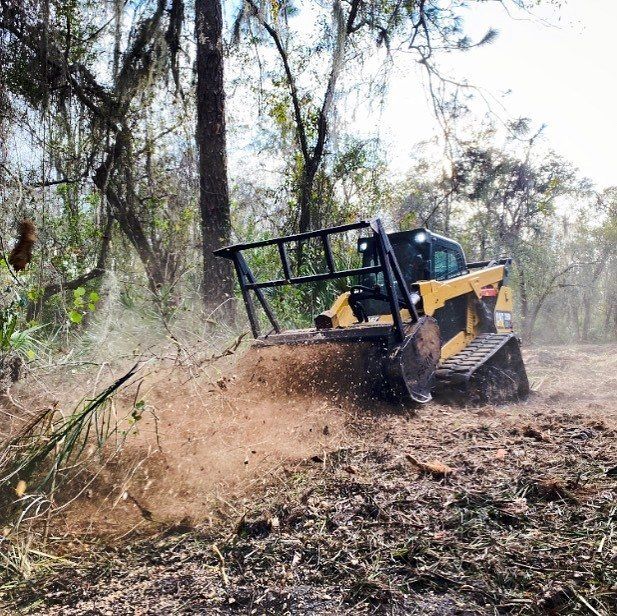
What is forestry mulching? Forestry mulching is a land clearing method that uses a rotating drum or disc cutter to grind vegetation into wood chips in a single pass. The material stays on site as ground cover instead of being hauled away or burned.
The machine is usually a compact track loader with a mulching head on the front, spinning fast enough to shred standing material where it stands. Nothing gets pushed into a pile. Nothing gets loaded on a truck. That single detail separates it from every other method: a bulldozer clear ends with debris piles and a haul-off bill, while a forestry mulching job ends with a layer of chips and a machine driving off the lot.
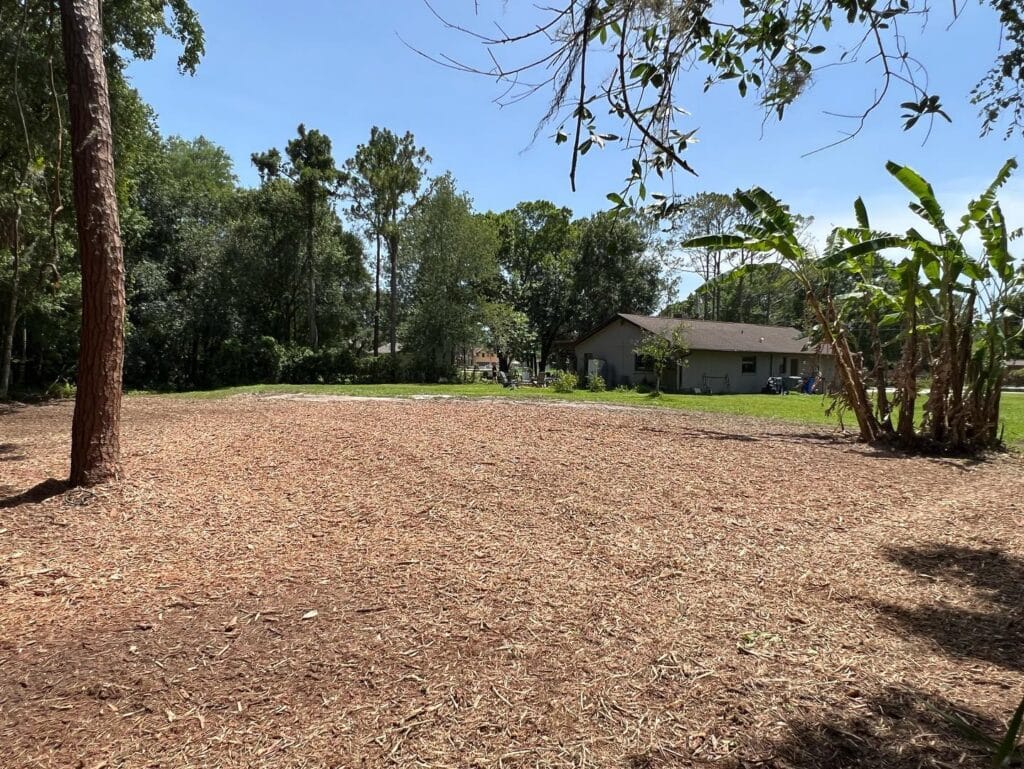
You’re left with a flat, walkable chip layer two to four inches deep. That mulch holds Florida’s sandy topsoil in place instead of leaving bare dirt to wash out in the first summer downpour, and it shades the weed seeds sitting in the soil. What you don’t get is a graded building pad. If the next step is a foundation, a grading contractor comes after us.
What We Don’t Do, On Purpose
We don’t spray and we don’t burn. That’s a deliberate line, and it costs us jobs, because both are faster ways to make certain plants stay down. We mulch instead because a burn pile needs an authorization, a setback, and the right weather, and because most of our customers live close enough to a neighbor that neither option is realistic.
The honest tradeoff: mulching removes the top growth, not the root system. Some Florida plants come back from what’s left, and we say that out loud during the walk instead of selling a one-and-done. We also cap what we take. Our heads handle trees up to about 12 inches in diameter, and a 30-inch live oak is a different job with different equipment.
Did you know? Forestry mulching usually needs no permit in Florida, because nothing is hauled off site and no burning takes place. That alone can save weeks off a project timeline compared to a clear-and-haul job.
Why Winter Is the Right Window in Tampa Bay
Most property owners call us in June. They’ve watched the yard close in through May, the rain starts, and suddenly the back acre is gone. It’s the worst month to start.
Tampa Bay runs on two seasons, not four. The rainy season runs roughly June through September and drops most of the year’s rain. The winter months are the driest, coolest part of what’s left, and that changes four things.
Dry ground carries the machine. A mulcher weighs several tons and sits on rubber tracks. On dry winter ground those tracks float over turf. On saturated August ground the same machine sinks, cuts ruts that hold water for months, and skips low spots that have turned to bog. We’ve pulled equipment out of properties in Pasco County that were perfectly workable eight weeks earlier. A three-day job in July can also stretch across two weeks of waiting for ground to firm up.
You can finally see the property. Vines die back, annual weeds collapse, and the wall of green thins enough that an operator can see fence posts, property pins, old drainage, well casings, and the trees you want kept. Almost every expensive surprise on a mulching job is something nobody saw before the head started spinning, and hidden metal is the big one. A strand of old barbed wire wrapped in brush can wreck teeth on a mulching head and stop a job cold.
Snakes, wasps, and fire ants are quiet. Florida overgrowth in August is full of things that move. Cool weather slows all of it down, and a crew that isn’t stopping every twenty minutes for a nest works faster.
The regrowth clock works in your favor. Mulch a lot in late June and Florida’s growing season goes to work on it immediately, with real regrowth showing in six to eight weeks on some properties. Mulch that same lot in January and nothing much happens for months. You get an open property through the best months of the Florida year, plus a mulch layer that’s had time to settle before the heat comes.
Pro Tip: Walk your property line in December or January before you call anyone for a quote. Flag what you want kept and anything you know is buried out there. The walk-through takes half the time and the estimate comes back sharper.
The Brazilian Pepper Problem Nobody Schedules Around
Brazilian pepper is the plant we get called about more than any other, and winter is exactly when it gets complicated.
This is where most land clearing companies go quiet, so we’ll be direct. Mulch a heavy pepper stand and do nothing else, and you’ll see sprouts within a season. The root system is still down there, and grinding the trunk never touches it. We don’t apply chemicals, so real eradication means your own follow-up treatment or a licensed applicator working behind us.
Winter Is Berry Season
Brazilian pepper flowers in the fall and its fruit is mature by December. Through the winter those berry clusters turn bright red, and that’s when the seed moves. Raccoons and opossums spread it locally. The long-distance spread comes from fruit-eating birds, and the biggest culprit is the migratory American robin, which winters in Florida in large flocks and carries viable seed across the county.
So a winter pepper job carries a question a summer one doesn’t: what happens to the berries? Grinding a fruit-heavy stand puts that seed on the ground in fresh mulch. Some of it is destroyed in the head. Some isn’t. Where the goal is stopping the spread and not just opening the lot, we’d rather schedule that stand in early fall before fruit matures, or plan a follow-up pass in spring. That’s a conversation we start, because the customer almost never knows to ask.
Why Mulching Alone Won’t Kill It
Does forestry mulching kill Brazilian pepper? No. Mulching removes the standing growth but leaves the stump and root system, and Brazilian pepper resprouts aggressively from cut stumps. Long-term control needs a follow-up plan.
This is where most land clearing companies go quiet, so we’ll be direct. Mulch a heavy pepper stand and do nothing else, and you’ll see sprouts within a season. UF/IFAS’s Center for Aquatic and Invasive Plants explains why: the plant resprouts vigorously from whatever tissue is left behind, and mechanical treatment on its own can actually increase stem density unless it’s followed up with chemical control. We don’t apply chemicals, so real eradication means your own follow-up treatment or a licensed applicator working behind us.
What mulching does deliver is still real. It takes a property from impassable to usable in a day, ends seed production on that stand for the year, and gives you access to treat what comes back while it’s ankle high instead of fighting a 20-foot canopy. Saw palmetto works the same way, since its growth comes from a thick underground stem a mulching head never touches. Mulching makes a palmetto lot open and mowable; it doesn’t make palmetto go away.
Pro Tip: If pepper is your main problem, plan on two visits. Mulch the stand, then walk it in three to four months and treat the sprouts while they’re small. Do that once and you’re usually done fighting it.
What It Costs and What Happens On Site
Forestry mulching typically runs $400 to $800 per acre for light to moderate overgrowth, and up to about $2,000 per acre for dense material. Hourly pricing is common on smaller jobs, generally $125 to $300 per hour.
| Vegetation Density | What’s Standing There | Typical Cost Per Acre |
| Light | Grass, scattered brush, small saplings | $400–$700 |
| Moderate | Thick palmetto, vines, saplings under 6 inches | $700–$1,200 |
| Heavy | Dense pepper or brush canopy, trees to 12 inches | $1,200–$2,000+ |
Density drives the number, not acreage. Ten open acres with scattered brush can cost less than three acres of solid pepper canopy, and national forestry mulching cost data shows the same spread. Access, terrain, how much you want kept, and how fine a finish you want move the rest of the quote.
The job itself starts with a walk. We look at density, tree sizes, access, and anything hiding in the brush, and you point out what stays. Then the machine works in sections. Most residential lots in Hillsborough County finish in a day; acreage runs longer. You end up with an open, walkable property and a chip layer on it, no pile and no haul-off, which is the same sequence as our land clearing process walkthrough minus the debris phase.
Did you know? Because forestry mulching involves no burning at all, it’s one of the few clearing methods that stays available during a county burn ban. When outdoor burning is suspended, brush piles have nowhere to go, and grinding material in place is often the only way to keep a project moving.
Where Winter Makes the Job Harder
The dry season is our busy season. Every builder, rancher, and HOA wants work in the same window, so January and February fill early. Call in December for a January job and you’ll usually get it. Call in late January and you may be looking at March. Dry brush and hot equipment in the same place is also a real fire risk at peak dry-season conditions, and December days run about ten and a half hours, so a job that fits in one summer day may need a second winter morning.
Book fence lines first, since fenceline clearing is nearly impossible to quote accurately at full summer height. Overgrowth cleanup ahead of a spring build follows close behind.
Book Your Mulching While the Ground Is Dry
Forestry mulching works in any month. It works better in the dry season, when the ground carries the machine, the property is visible, the wildlife is quiet, and the mulch has months to settle before Florida’s growing season starts. If pepper is part of your problem, winter adds one more reason to plan carefully rather than book the first available crew.
If you own property in Hillsborough County, Pasco, Pinellas, or anywhere in the 12 counties we cover, this is the window. Contact Clear Cut Heavy Brush Mulching or call (813) 683-2988 for a free on-site estimate, and we’ll walk your land, tell you what our machines can handle, and give you a straight answer about what comes back.
Frequently Asked Questions
Is winter a good time for forestry mulching in Florida? Yes, winter is the best window in Tampa Bay. Dry ground supports the equipment without rutting, thinned-out vegetation makes hazards and property lines visible, and mulch applied in the cool months suppresses regrowth before the spring growing season.
How long does forestry mulching last before regrowth? Most Florida properties show noticeable regrowth within one to three years, depending on species and how deep the mulch layer is. Work done in the dry season lasts longer, since growth stays slow for months instead of starting immediately.
Does forestry mulching remove stumps? It grinds stumps down to or slightly below ground level as the head passes, leaving a walkable surface. It does not remove the root system, so a site headed for a foundation still needs grading and root work afterward.
How big of a tree can a forestry mulcher handle? Our mulching heads handle trees up to roughly 12 inches in diameter. Larger trees need removal equipment instead, and we tell customers that during the site walk rather than after the crew arrives.
Do you need a permit for forestry mulching in Florida? Most forestry mulching jobs need no permit, since no material is hauled off site and nothing is burned. Local rules can still apply near wetlands, conservation easements, or protected trees, so check with your county before work starts.