Choosing the wrong land clearing method costs you money, time, and sometimes the trees you wanted to keep. Forestry mulching is the right call for most residential properties and overgrown lots in the Tampa Bay area. Traditional clearing makes sense when you need bare, graded ground for construction. Here’s how to tell the difference before you hire anyone.
Most Tampa Bay homeowners searching for land clearing assume all methods produce the same result — a clear lot. They don’t. The method you pick determines how your soil behaves after the work is done, whether you need additional permits, and how quickly the site is usable.
Forestry Mulching: The One-Machine Method
Forestry mulching uses a single machine with a rotating drum to cut, grind, and shred vegetation on-site. Trees, stumps, brush, and vines get processed into a layer of mulch that stays on the ground. Nothing gets hauled away. Nothing gets burned. You walk the site the same day the machine leaves.
The key advantage in Florida is what the mulch layer does after the machine is done. Florida’s sandy soil loses topsoil quickly when exposed. The mulch layer slows erosion from summer rain events and holds moisture during dry stretches. For any property not going straight into concrete construction, that mulch is working for you long after the crew packs up. According to Virginia Cooperative Extension research on land clearing methods, mulching costs significantly less per acre than conventional clearing when debris disposal is factored in, and it preserves topsoil integrity in ways bulldozing cannot.
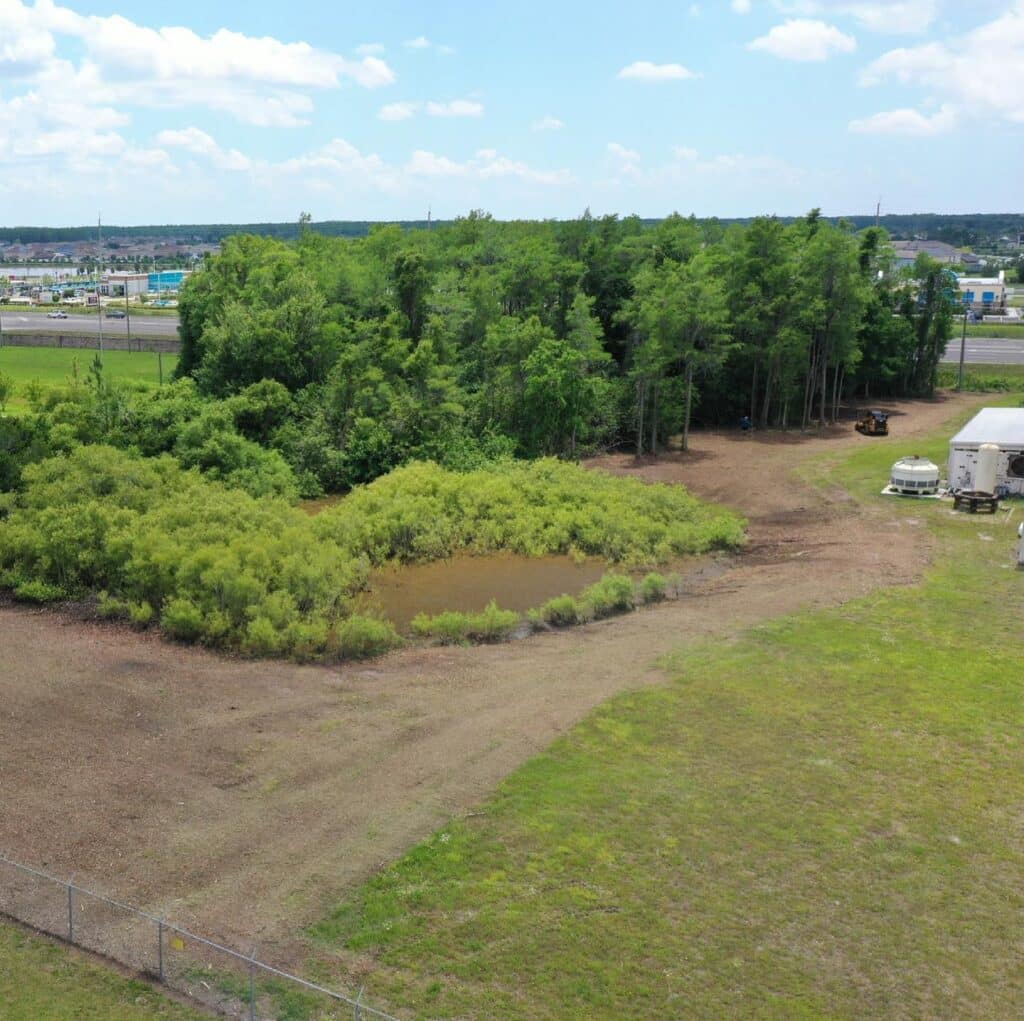
One thing we’ve seen repeatedly after clearing properties across Hillsborough, Pasco, and Polk counties: the most common mistake property owners make is hiring a dozer-based crew for a job that didn’t need it. On a half-acre overgrown lot with palmettos and Brazilian pepper trees, a forestry mulcher cleans the site in a few hours. That same job with a bulldozer requires a dozer pass, stump grinding, debris hauling, and sometimes a burn pile — weather-dependent steps that can stretch a one-day job into a week.
What Forestry Mulching Handles Best
Forestry mulching is the right call when your property has moderate brush, small trees, invasive species, or overgrown vegetation you want removed without destroying the surrounding soil. It’s also the preferred method when you want to keep specific trees standing — the operator can work around them without damaging root systems, something a dozer operator simply can’t do. Our residential land clearing services are built almost entirely around this method because the results in Florida’s climate are consistently better than traditional alternatives.
Pro Tip: Before booking any mulching crew, ask what their machine’s drum diameter and tooth configuration are. Different mulching heads handle Florida palmettos and softwoods differently — a machine optimized for dense Southern hardwoods will struggle on heavy palmetto stands, and that mismatch shows up in the finished site.
Traditional Clearing: When You Need a Clean Slate
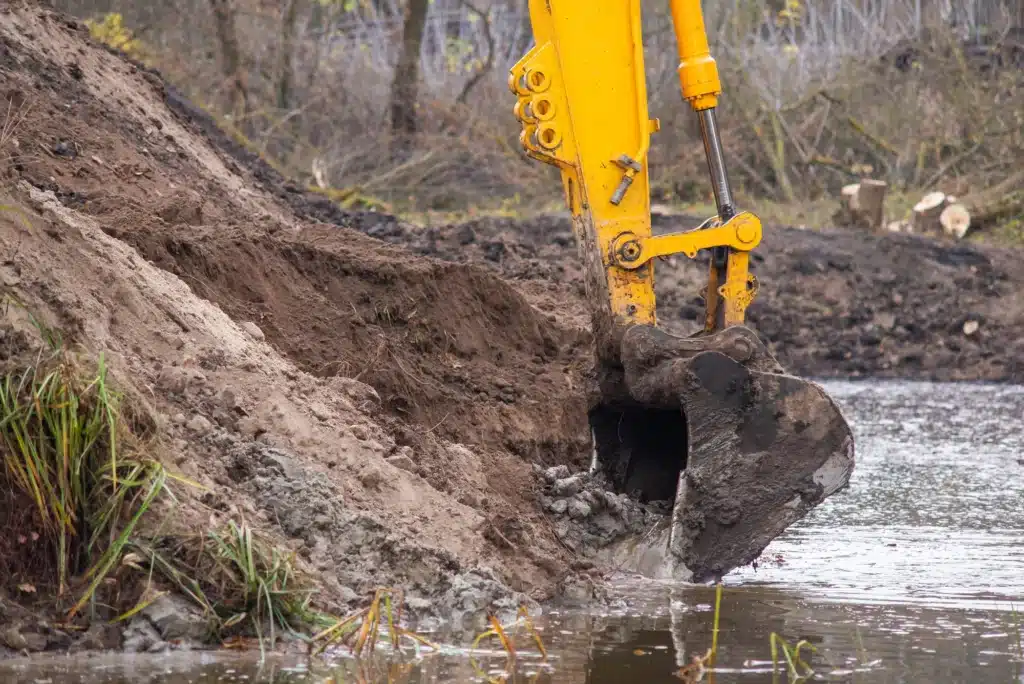
Traditional clearing — dozer pushing, cut-and-grind, or excavator-based methods — is the right fit when the goal is a completely bare, graded site. Commercial construction projects, large-scale agricultural preparation, and situations involving dense mature timber all fall into this category.
The tradeoff is cost and soil disruption. When a dozer pushes trees, it rips up root systems and pulls topsoil with them. On a project requiring grading anyway, that disruption is acceptable. On a property where you want natural grass to return or existing trees to stay healthy, the soil damage from traditional clearing can follow you for years.
Debris handling adds real cost that often doesn’t surface in the initial quote. Burning requires dry conditions and county authorization. Hauling adds expense based on volume and distance. Neither of those costs appears in a mulching quote — because there’s no debris to manage.
Did You Know? Dozer-based clearing exposes bare soil that’s highly vulnerable to Florida’s summer rainfall. The Florida Department of Environmental Protection requires construction sites disturbing one or more acres to obtain NPDES stormwater permit coverage — adding permitting steps and timelines that forestry mulching typically sidesteps.
Cut-and-Grind vs. Grubbing: Smaller Method Variations
Cut-and-grind involves cutting trees at the base and then grinding stumps separately — more selective than bulldozing, useful when large trees need to come down without pushing the entire site. Grubbing pulls root systems fully out of the ground and is reserved for building footprints where underground organic material could decompose and cause settling.
Pro Tip: If your project involves cutting large timber, find out whether any of it has salvage value before your contractor starts. Pine and certain hardwoods can be sold to a timber buyer before dozer work begins — and that sale can meaningfully offset your clearing cost.
Both methods are almost always more expensive per acre than forestry mulching for a typical overgrown residential or commercial lot, because they require more equipment and more cleanup steps.
How to Choose the Right Method for Your Property
Question: What’s the most affordable land clearing method for a residential lot? Answer: For most residential lots under five acres with moderate brush and no large timber, forestry mulching is typically the most affordable option because it eliminates hauling, burning, and separate stump grinding costs.
The decision comes down to what the land needs to become. Choose forestry mulching if you want to keep some trees, your land has moderate to heavy brush without dense stands of large timber, you need the site walkable quickly, or your project doesn’t require grading. Choose traditional clearing if the site is going into construction that needs a graded surface, you have a dense stand of mature timber requiring full removal, or your project needs complete root system extraction.
Many of our commercial land clearing clients use a hybrid approach — forestry mulching to clear the vegetation layer first, then targeted dozer work only in the footprint where the building slab will go. This cuts total project cost and avoids disturbing soil in areas that don’t require it.
Did You Know? Brazilian pepper tree and melaleuca — two of the most common invasive species on Tampa Bay properties — respond well to forestry mulching. The machines grind them below the crown, interrupting regrowth more effectively than simple cutting. Managing overgrown and invasive vegetation often doesn’t require traditional clearing at all.
Matching Method to Timeline and Budget
A forestry mulching crew can mobilize and complete a standard residential lot in a single day. Traditional clearing with debris hauling can stretch to several days depending on haul distances, burn authorization windows, and weather.
Budget-wise, a straight comparison on paper often favors traditional clearing — until you add the line items quotes usually leave out. Hauling costs, burn permits, stump grinding, and erosion control seeding after the fact all add up fast. For any project where mulching is viable, get quotes that include debris disposal before comparing numbers.
When getting quotes from multiple contractors, ask each one specifically how they handle stumps. Forestry mulching grinds stumps to near ground level — effective for most residential uses, but not always sufficient for areas that will be graded or built on. Knowing that difference upfront prevents a costly follow-up conversation after the work is done.
Make the Right Call Before the Equipment Arrives
For most Tampa Bay homeowners, forestry mulching delivers the right combination of cost, speed, and site quality. Traditional clearing earns its place when construction grading is the end goal. The method you choose before the crew shows up will shape how your property looks, holds, and behaves for years after the job wraps.
Contact Clear Cut Heavy Brush Mulching for a free site assessment. We’ll walk your property and give you a straight answer on which method makes sense — before a single machine is loaded onto a trailer.
Frequently Asked Questions
What is the most eco-friendly land clearing method?
Forestry mulching is the most eco-friendly option. It avoids burning and chemicals, leaves topsoil intact, and converts cleared vegetation into nutrient-rich mulch that decomposes naturally on-site.
Can forestry mulching remove large trees?
Forestry mulching handles trees up to about 6–8 inches in diameter effectively. Larger, mature trees typically require cutting and separate stump grinding, or traditional clearing equipment, before or alongside mulching work.
Does land clearing require a permit in Hillsborough County, Florida?
Most forestry mulching jobs don’t require a permit. Projects disturbing one or more acres may require NPDES stormwater coverage through the Florida DEP, and clearing near wetlands or protected species may trigger additional review.
How long does land clearing take on a one-acre lot?
A forestry mulching crew can typically clear a one-acre lot in a single day under normal conditions. Traditional clearing with debris hauling generally takes longer due to the additional equipment and disposal steps involved.
Is forestry mulching cheaper than dozer clearing?
For most residential and small commercial lots, yes. When debris hauling, burning, and separate stump grinding are included, forestry mulching typically costs less per acre than traditional clearing methods.