If you’re clearing land in the Tampa Bay area, the method you pick will affect your cost, your timeline, and whether you keep the trees you want. Forestry mulching costs less and finishes faster than traditional clearing for most residential and small commercial lots. This guide breaks down every method, real cost ranges for our region, and the permit rules that trip up first-time landowners.
Tampa Bay’s mix of palmettos, vines, and fast-growing brush makes land clearing different here than almost anywhere else in the country. What works in Georgia or the Carolinas often fails in Florida’s subtropical climate, where cleared land can start growing back within weeks. Knowing your options before you call a contractor saves you money and protects the parts of your property worth keeping.
What Is Land Clearing?
Land clearing is the process of removing trees, brush, stumps, and vegetation from a property to make it usable for building, farming, or general upkeep. It covers everything from a quarter-acre residential lot to dozens of acres of wooded land. The right method depends on your goals, your soil, and what you want to keep standing when the work is done.
Most homeowners think of land clearing as an all-or-nothing job. In reality, modern equipment lets crews be selective about what stays and what goes. That distinction matters more in Florida than in drier climates, where the line between “cleared” and “scorched” is the difference between a usable yard and a muddy mess.
Did You Know?
Florida’s wet, sandy soil holds onto cleared stumps and root balls longer than soil in drier states. That’s one reason traditional bulldozing often leaves more visible scarring here than in other regions.
The Main Land Clearing Methods
Three methods cover almost every land clearing job: forestry mulching, traditional clearing with heavy equipment, and chemical or manual brush removal. Each has tradeoffs in cost, speed, and what’s left behind.
Forestry Mulching
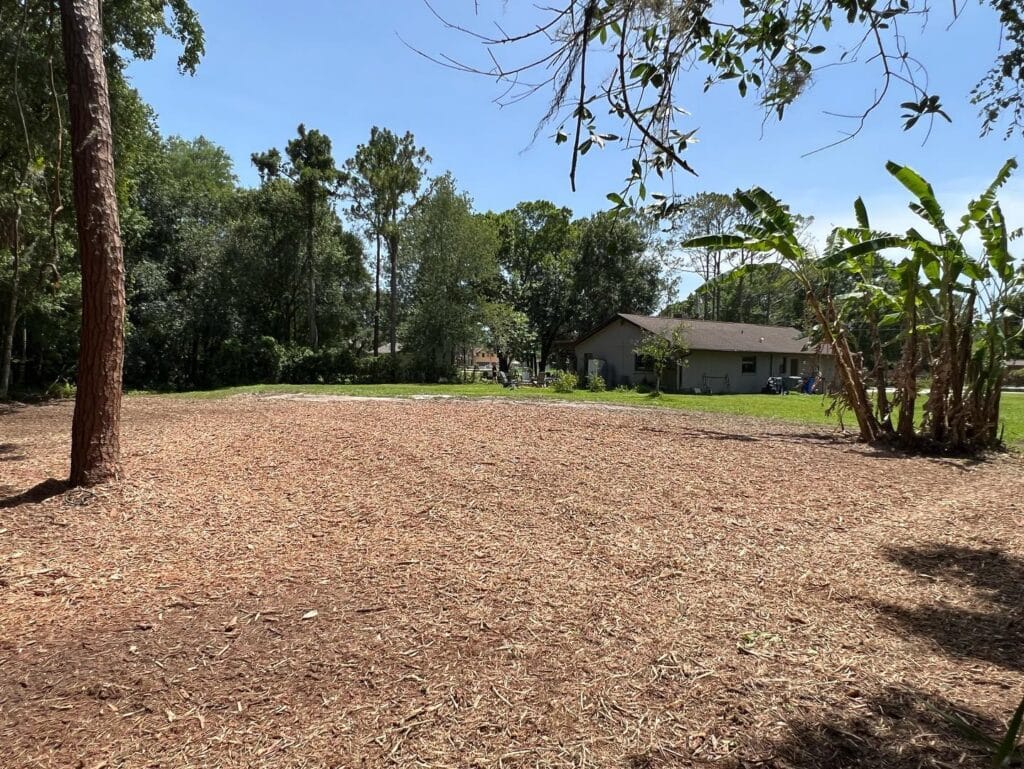
Forestry mulching uses a machine with a rotating drum to grind brush, small trees, and stumps directly into mulch on-site. There’s no burning and usually no hauling. The mulch layer left behind helps control erosion and adds nutrients back into the soil as it breaks down. This approach works especially well for vacant and residential lot clearing, where preserving the surrounding soil structure matters as much as removing the brush itself.
We’ve cleared land across Hillsborough, Pasco, and Polk counties using this method almost exclusively, and the biggest reason customers choose it is simple: it lets a crew skip around a tree they want to keep. Bulldozers can’t do that without damaging root systems.
Traditional Clearing (Cut and Grind, or Dozer Push)
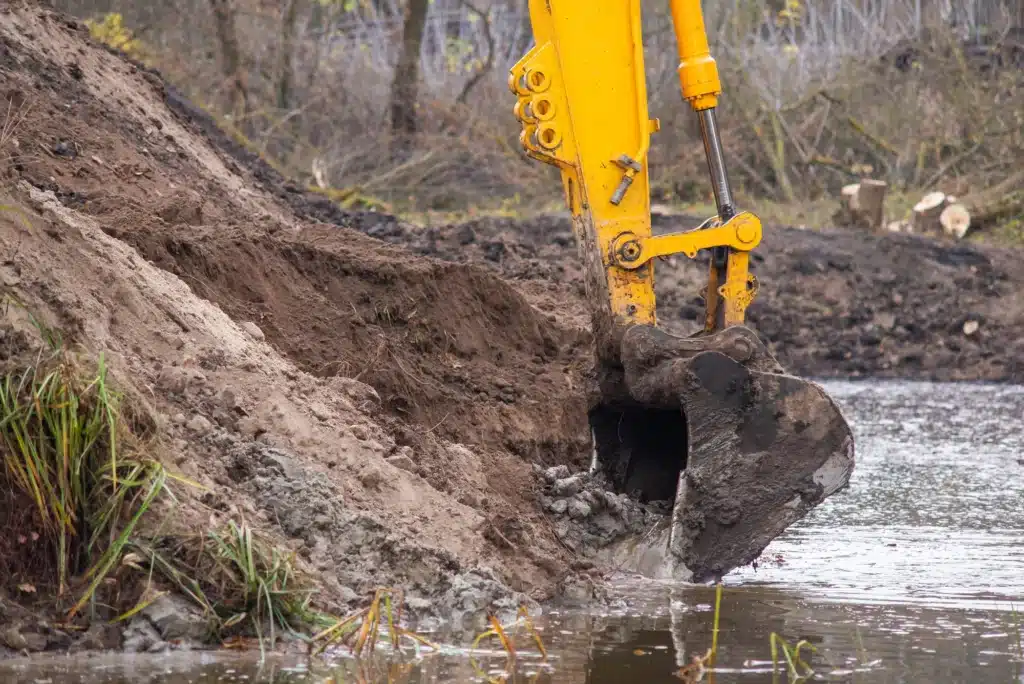
Traditional clearing uses excavators or bulldozers to push over trees and pile debris for hauling or burning. It works well for large commercial sites that need a completely flat, graded surface, but it usually costs more once you factor in debris removal and potential burn permits.
Pro Tip
If you’re keeping any trees on a residential lot, ask your contractor specifically how they protect root zones. Equipment that compacts soil near a trunk can kill a tree slowly over the next year, even if the bark looks untouched on day one.
Chemical and Manual Clearing
Chemical clearing relies on herbicides to kill unwanted vegetation before manual removal. It’s slower and generally reserved for invasive species control rather than full-property clearing, since chemicals can affect soil health and nearby plants you want to protect.
How Much Does Land Clearing Cost in Tampa Bay?
| Method | Typical Cost per Acre | Best For |
| Forestry mulching | $1,500–$3,500 | Residential lots, wooded acreage, selective clearing |
| Traditional dozer clearing | $3,000–$6,000+ | Large commercial sites, full grading |
| Chemical/manual clearing | $500–$2,000 | Invasive species, small brush areas |
Forestry mulching tends to land on the lower end of this range because it skips two expensive steps: hauling debris to a dump site and grading afterward. A half-acre residential lot with moderate palmetto and brush density usually falls in the $1,500–$2,500 range total, while a heavily wooded acre with mature trees runs higher due to the added machine time.
Did You Know?
Hauling debris off-site can add $500 to $1,500 per acre to a traditional clearing job in Hillsborough County alone, depending on dump fees and distance. Mulching eliminates that cost entirely since the material stays on your land.
Do You Need a Permit to Clear Land in Florida?
Most residential forestry mulching projects in Hillsborough County don’t require a permit. You’ll likely need one if your project involves clearing more than 10,000 cubic yards of material, removing protected tree species, or prepping a site tied to a new home build permit application.
Permit rules vary by county, so a property in Pasco or Polk may face different thresholds than one in Hillsborough. Always confirm directly with your county’s land development office before starting, especially near wetlands or conservation easements, where Southwest Florida Water Management District rules can also apply.
What to Expect During the Clearing Process
A typical residential forestry mulching job moves through three phases: a site walk to mark trees for preservation, the mulching pass itself, and a final walkthrough to confirm the result matches what was discussed. Most crews can clear about an acre per day under normal conditions, though dense palmetto stands or heavy vine cover can slow that pace.
One detail that surprises first-time customers: the ground stays stable enough to walk or drive on the same day clearing finishes. There are no open brush piles waiting for a dry day to burn, and no standing water issues from compacted, scraped soil.
Pro Tip
Schedule your land clearing for late winter or early spring. Florida’s dry season gives equipment firmer ground to work on and avoids the rapid regrowth that summer rains trigger within weeks of a job finishing.
Choosing the Right Method for Your Property
Question: Which land clearing method is cheapest for a small residential lot? Answer: Forestry mulching is typically the most affordable option for residential lots under five acres, since it avoids hauling and grading costs that traditional clearing requires.
If your main goal is opening up space while keeping specific trees, mulching is almost always the better fit. If you’re grading a commercial site for new construction and need completely flat ground, traditional clearing may be worth the higher cost. Many of our commercial clients clearing land for new development end up using a hybrid approach: mulching first to clear brush, then limited grading only where the building footprint requires it.
For property owners managing overgrown lots that have gotten away from them over time, our guide on reclaiming overgrown property walks through a slightly different process suited to long-neglected land.
Getting this decision right from the start avoids a costly second visit. We’ve seen plenty of properties where a homeowner tried the cheapest option first, only to call us back six months later once regrowth or erosion made the job harder than the original clearing would have been.
Wrapping Up
Land clearing in Tampa Bay comes down to three choices: forestry mulching, traditional clearing, or chemical removal, with cost and tree preservation as the deciding factors. For most residential properties and moderate-sized commercial lots, mulching delivers the best balance of price, speed, and the ability to keep the trees you actually want.
Ready to find out what your property needs? Contact Clear Cut Heavy Brush Mulching for a free, no-obligation site assessment, and we’ll walk your land with you before any equipment shows up.
Frequently Asked Questions
How long does it take to clear an acre of land?
Most forestry mulching crews clear about one acre per day under normal conditions. Dense palmetto, heavy vines, or wet ground can slow the pace, so larger or overgrown properties may take several days.
Is forestry mulching better than burning brush piles?
Yes, for most residential and commercial properties. Mulching avoids open burn permits, eliminates fire risk, and turns debris into a useful protective layer instead of ash.
Can I keep specific trees during land clearing?
Yes. Forestry mulching equipment can selectively clear around trees you want to preserve without damaging their root systems, something traditional dozer clearing struggles to do safely.
Does land clearing require a permit in Hillsborough County?
Usually not for standard forestry mulching projects. Permits become more likely if you’re clearing over 10,000 cubic yards, removing protected species, or tying the clearing to a new home build permit.
What’s the average cost to clear a half-acre lot in Tampa Bay?
A half-acre lot with moderate brush typically costs between $1,500 and $2,500 using forestry mulching. Heavier vegetation or mature trees can push that estimate higher.